A professional photographer's reflection on why sometimes you have to put down the camera and pick up a "pen."
Lessons from Bismarck Lake
As photographers, our families and clients entrust us to capture their most important moments.
We place ourselves at the center of every moment with the mantra: "Here, I got this."
Using the math: 1 picture = 1,000 words, 3,000 wedding photos equate to millions of words.
But when was the last time you heard of someone hiring a reporter to capture their wedding?
Never.
We've convinced everyone—including ourselves—that the camera is enough.
We fail to consider that images are just placeholders for the moments we hold dear. The true meaning of a moment is locked inside of us, not in the images we take to represent them.
I'm not calling for the end of photography.
I'm calling out limitations that everyone seems to be overlooking.
We're caught up in photographing the Emperor’s New Clothes using gear incapable of capturing the invisibility of what's important.
As the "professional"—someone revered to capture moments—we need to stop pretending the camera does it all. We need to combine words and visuals if we're serious about capturing what a moment truly means.
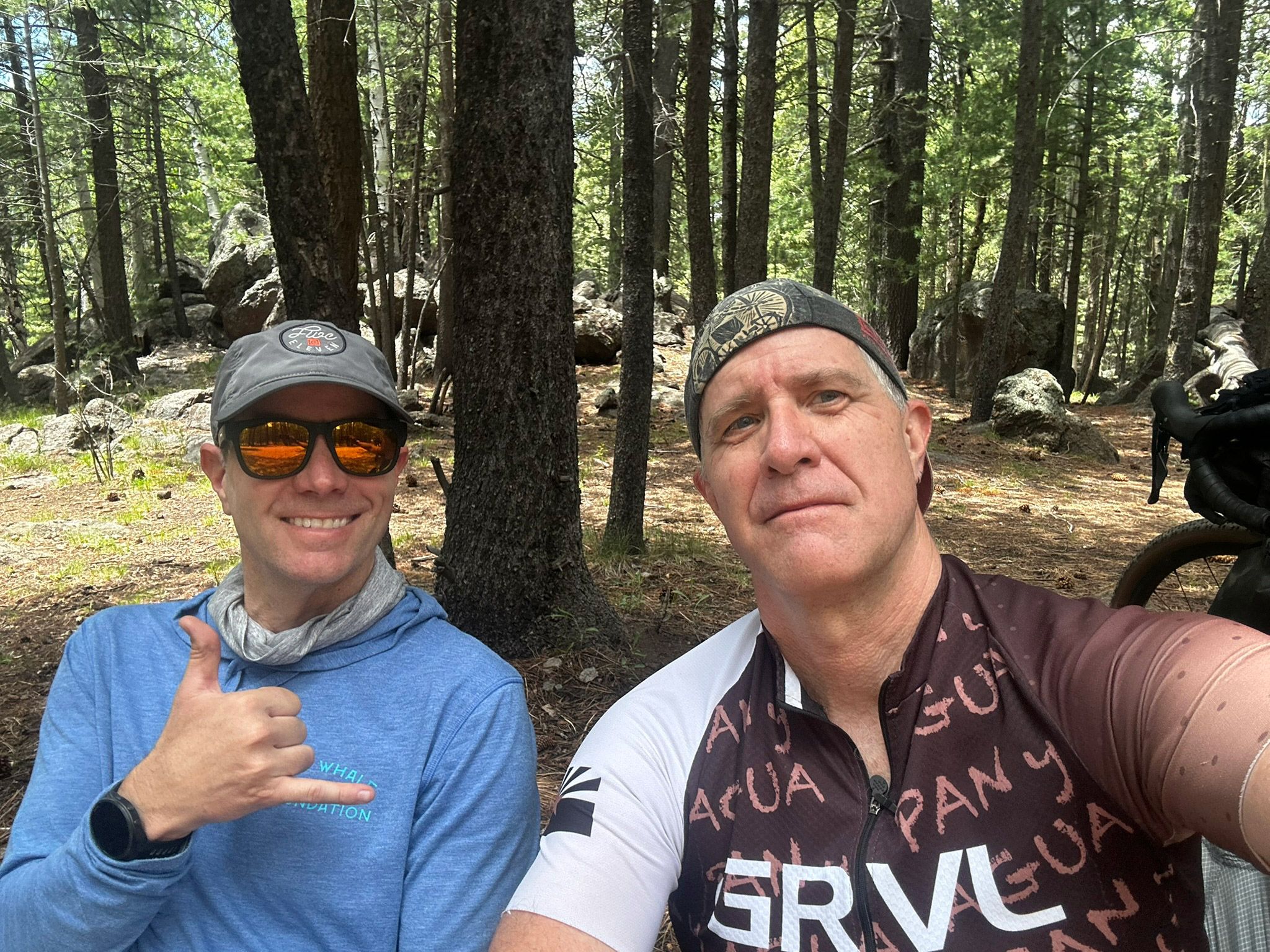
Sean and Kris hanging out at camp near Bizmarck Lake.
The Trip That Photos Can't Talk about
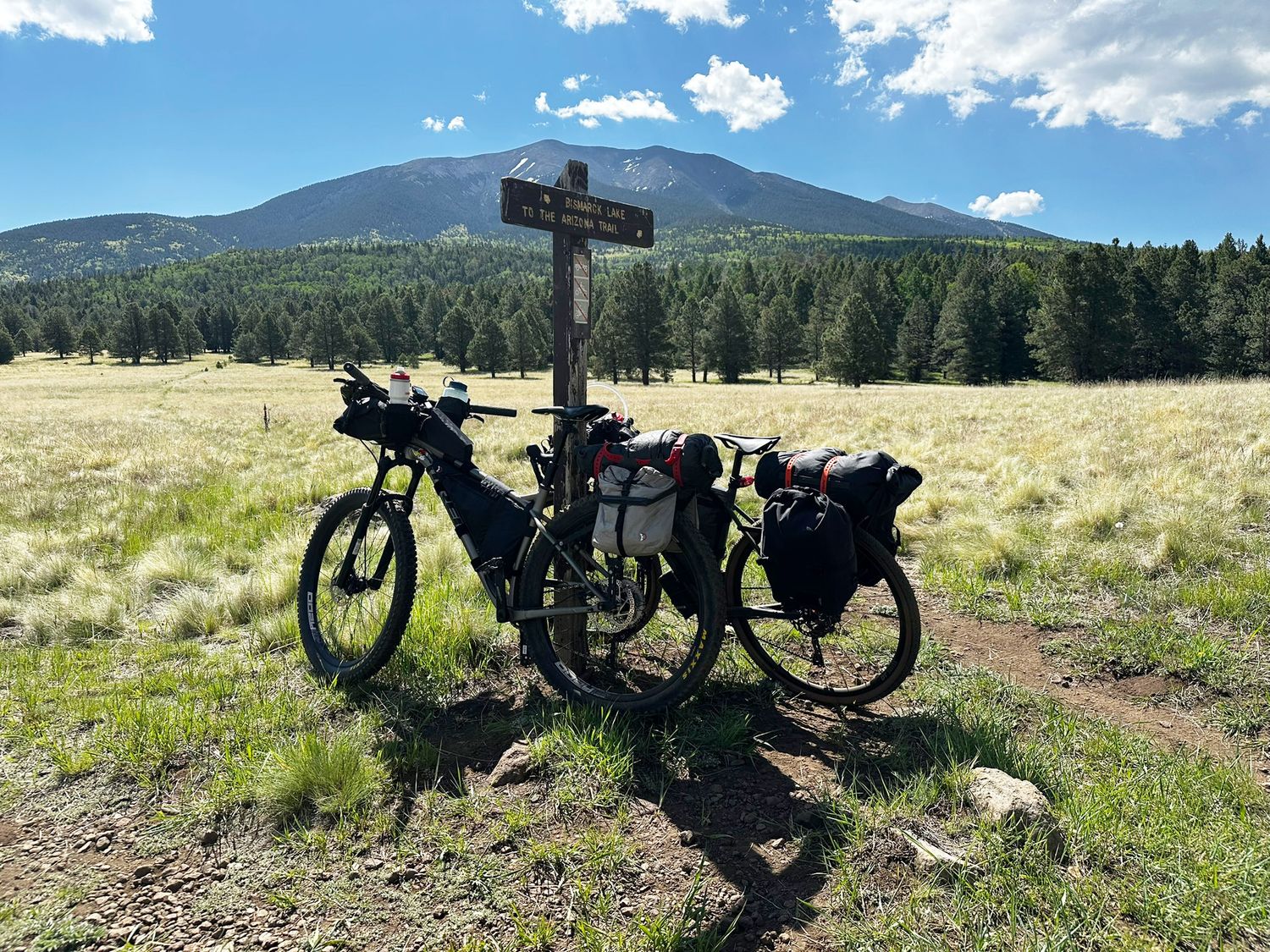
Last weekend, I completed a two-day bike camping trip to Bismarck Lake with my friend Kris—about 40 miles total of riding with full camping gear. When I look back at the photos from this trip years from now, what it will look like is a lot of fun between two friends: bike camping and adventure. Beautiful mountain scenery, loaded bikes, camp setups, maybe some tired but happy faces.
But what I might forget are the lessons, nuances and inside jokes that made the trip memorable. Like how we spent the whole weekend coming up with names for each other—Kris called me Agua, then Hydro, and finally H2Openshaw because of my hydration habits, while I dubbed him (uncreatively) Mr. Snickers for his go-to nutrition preferences.
There was the sound of his squeaky sleeping pad at 3 a.m. and the Facebook Marketplace bike deals he was brokering for my new mountain bike while we sat around camp.
The photos will show us smiling, but they won't capture what I learned: I want to do more bike camping. I want to figure out how to balance needs and wants. I need more hours on the trail so that it becomes second nature.
It's shining a light on the fact that I need to maintain a higher priority on my fitness and wellness and definitely my weight.
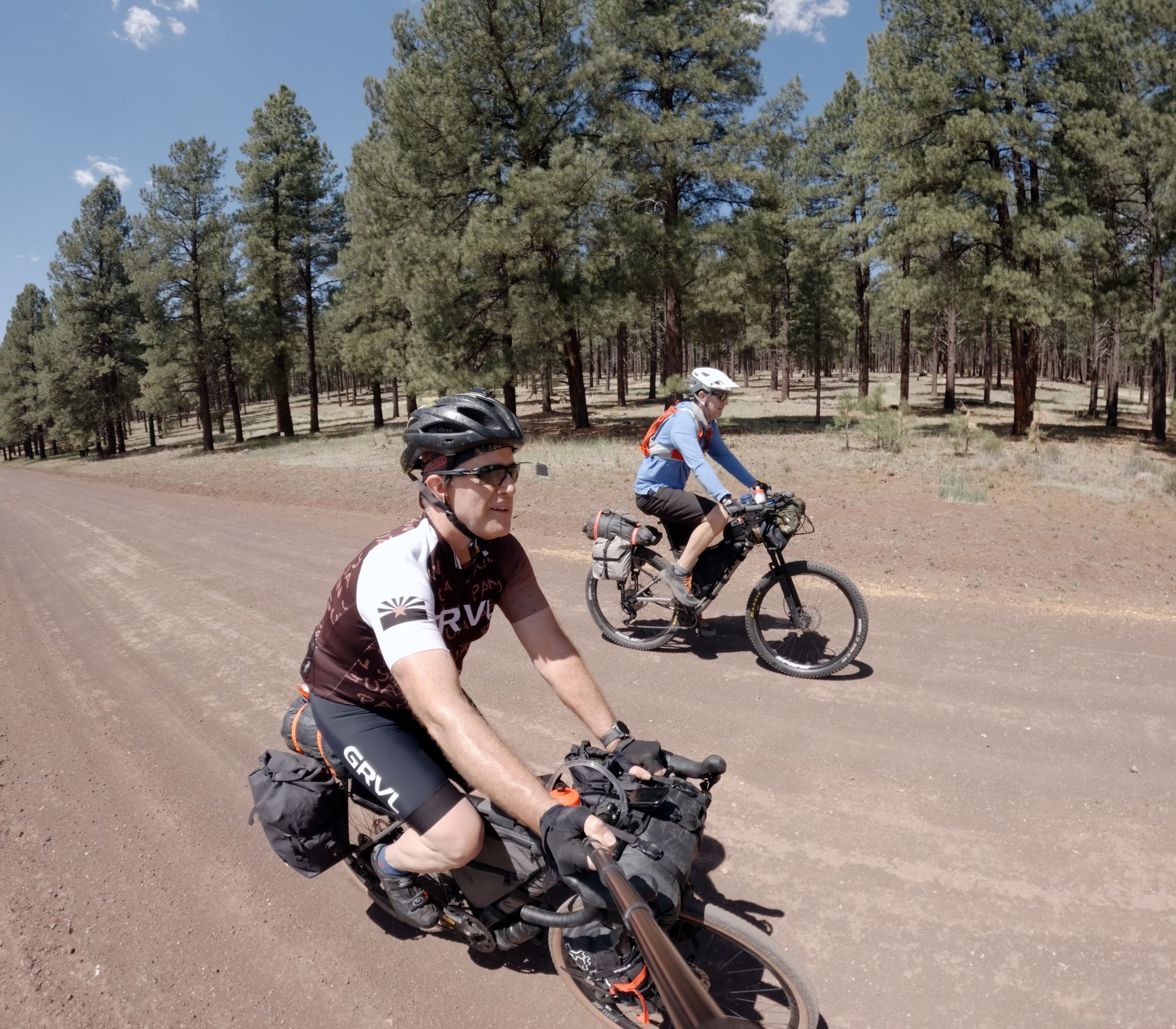
Sean and Kris navigating the forest service roads up to Bizmarck Lake.
The Weight of What We Carry
The images from the trip will show heavily loaded bikes, but they won't tell you about the constant mental math used to calculate weight versus necessity. The total weight of my bike was 82 pounds—but that includes about 20 pounds of water. And while that may be somewhat overkill, there are going to be trips that require that much water. This trip is intended as a litmus test to help us figure this out when the stakes aren't very high.
A photograph can show you gear, but it can't capture the learning process.
What else would you bring, or not bring, on a two-day, one-night trip with no water in between? That question kept coming back because it's the key to everything. Strip away what you don't need, figure out what's actually essential, and suddenly these adventures become possible instead of just dreams.
It's a metaphor for life itself—how much of what we think we need is actually holding us back?
The bike camping question becomes the life question: what are the essentials that make life enjoyable without all the baggage that holds us back and makes us work so unnecessarily hard?
The serendipity of this lesson hit me when I got home.
While Kris and I were out there weighing all my gear, deciding what was necessary versus luxury—my wife was home helping a friend go through a huge storage locker of "stuff" left by her recently deceased husband. Looking at the boxes made her realize that she never wants to leave an avalanche of "stuff" for her loved ones to go through when she's gone.
The conversation I had with Kris about his "one drawer" philosophy—where you examine one "drawer" in your life at a time, pulling out all the stuff and sorting it into four boxes: keep, donate/give away, throw away, and e-discard—suddenly felt urgent.
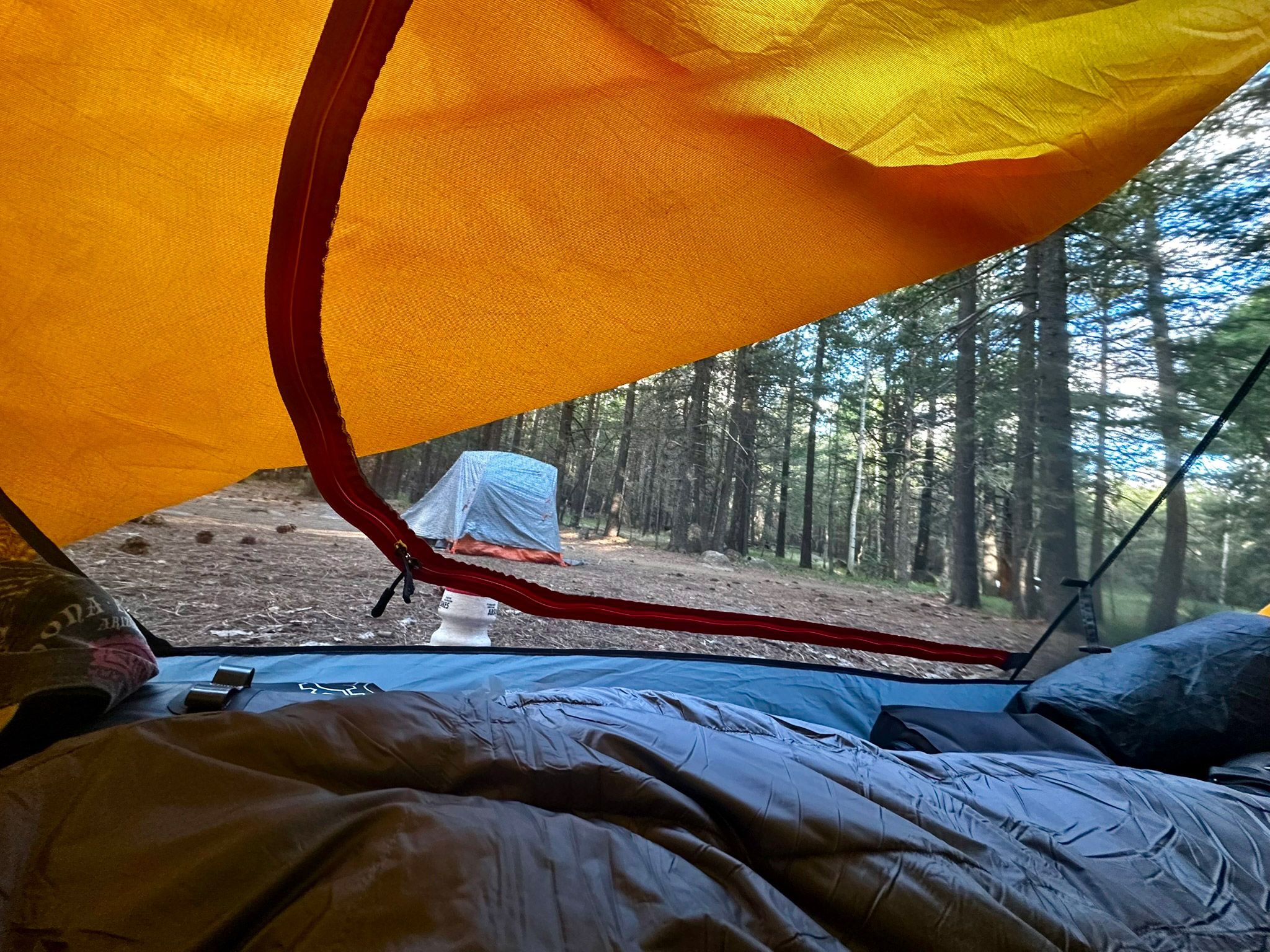
Hanging out in our tents for a quick nap. While we chilled, we encountered a group who wandered into our campsite, looking to squat on an unused section of our site. The nerve!
The Stories Photos Miss
Photos will show our campsite, but they won't tell you how unnerved I was by a 3 a.m. visitor.
I woke to something snorting and pawing at the ground outside my tent.
I made a really loud, grand gesture roll and a grunt as I rolled over to scare whatever it was. I heard it bolt and never return.
When Kris asked if it was jiu-jitsu, I told him it was my Sakura ninja roll. "Survival ninja roll attack, attack roll threat and attack posture roll," he said, making it sound way more dramatic than it was. Later, we decided it was Bigfoot by my tent.
The photos won't capture the gear failures and MacGuiver fixes that become part of the story.
I learned the need for extreme organization because one of the downsides of camping is that you're always looking for something. It's even more apparent with bike camping because gear is compressed and distributed across multiple panniers and bags.
A time lapse of Sean and Kris setting up camp near Bismarck Lake.
Adult Friendship and Shared Challenge
The images will show two middle-aged guys on bikes, but they can't capture the deeper significance.
I really enjoyed the last couple of days, partly because it's hard to make friends when you're an adult. You have a lot of acquaintances, people you have peripherally in your life or at work. But there aren't many opportunities to work on friendships when you're old and married, and I'm talking about true relationships that mean something beyond the obligatory hello.
Photos can't document the conversations that happen when you're both tired, when pretense falls away, when shared challenge creates real connection. Like when unexpected personal revelations emerge—things you realize you've never shared with a friend you've known for years.
These moments happen when you're breaking down camp, tired, honest about who you really are.
The Fitness Reality Check
A photo might show me struggling up a hill with 85 pounds of gear, but it can't capture the honest self-assessment that comes with physical challenge.
When I look back at these photos, years from now, I'll remember wanting to double down and not let myself get so out of shape between seasons. Every year I swear I'm going to maintain my fitness level, and every year I get sucked into life. I think having these kinds of adventures gives my brain that "oh shit, I need to stay in shape" framework so that I can maintain this lifestyle well into my 80s and 90s.
The conversation about training philosophy—Zwift versus weight lifting—none of that shows up in photos. But it's central to understanding why these adventures matter.
I told Kris I'd see his Zwift argument and raise him with my weight-lifting defense. If I'm not going to Zwift, I absolutely need to do more lifting. I can be aerobically strong, but if my body is falling apart because age is robbing me of my strength, then that's not going to matter as much.
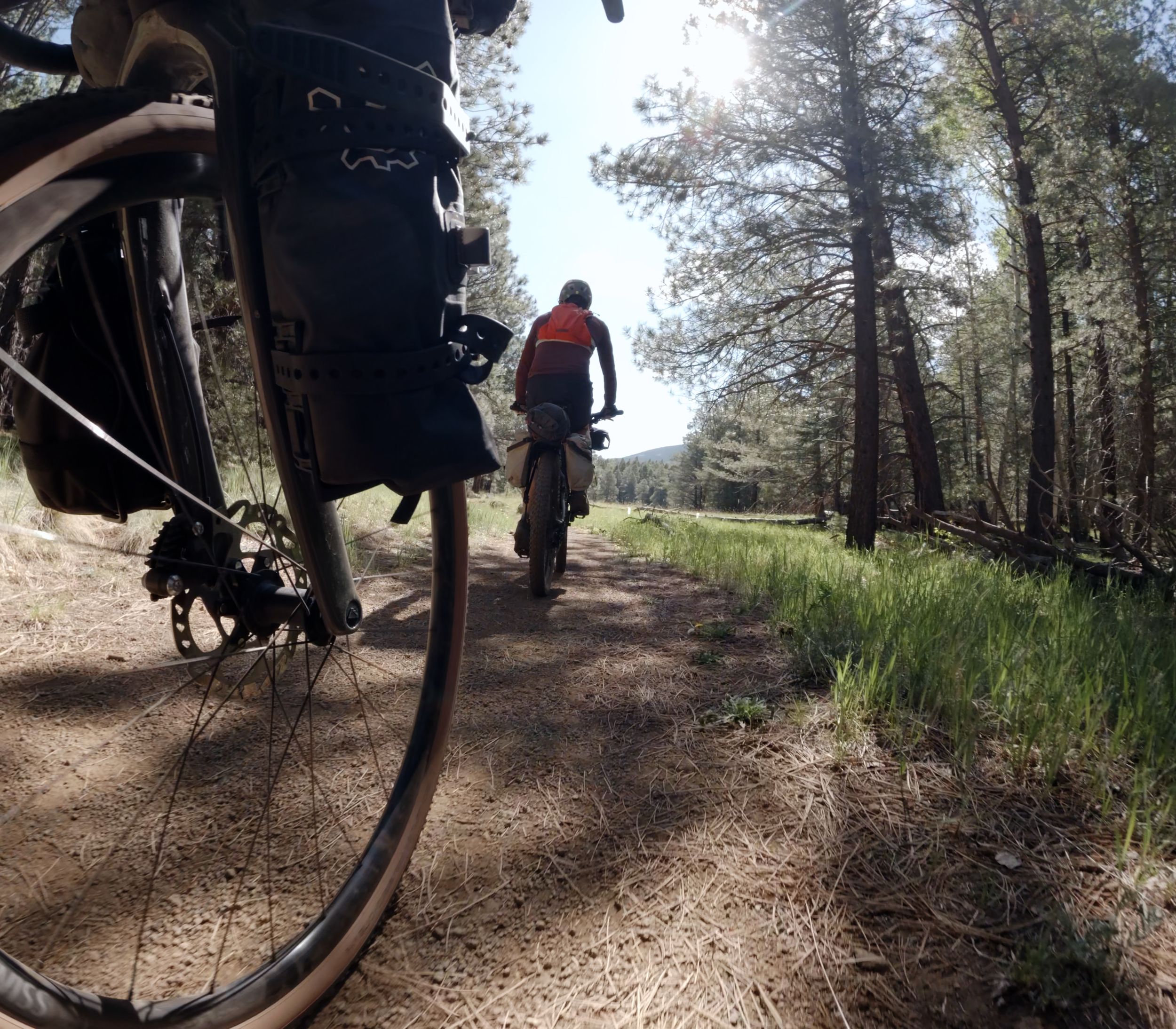
Crusing along one of the smoother sections of trail.
The Timing of Capture
What I've learned through this practice is that the timing of documentation matters as much as the documentation itself. The closer we are to the moment when it happened or is happening, the richer the details we can retain.
But there's another nuance that's often overlooked—there's an energy about not knowing what you don't know. The anticipation before someone graduates or gets married is much different from what it's like once the event actually happens. The feelings you capture from someone just about to skydive for the first time are much different than what it feels like once the person is through the terror and is safe on the ground.
What you learn about someone or capture about the moment BEFORE the moment happens adds depth and details you can't capture once the moment has passed.
That's why I record myself before adventures—like riding to meet Kris, nervous and excited. I was excited/nervous for this trip. A little bit because of my fitness level, although we're only doing 20 miles each day.
There was uncertainty in my voice, anticipation, the energy of not yet knowing how it will unfold.
The questions I asked myself before we even started riding reveal something different than the answers I had afterward. That vulnerability, that honest uncertainty—it disappears once you've proven to yourself that you can do it.
It's why I insisted we talk while breaking down camp rather than waiting until we got home. What I thought would be a quick gear conversation turned into something bigger—about friendship, about getting older, about the honest shit you face when you push yourself beyond what's comfortable.
Wait even a day, and you lose the texture of the experience.
Wait a week, and you lose the nuance.
Wait a year, and you're left with just the photos—which are beautiful, but incomplete and lacking the true meaning left scattered across time.
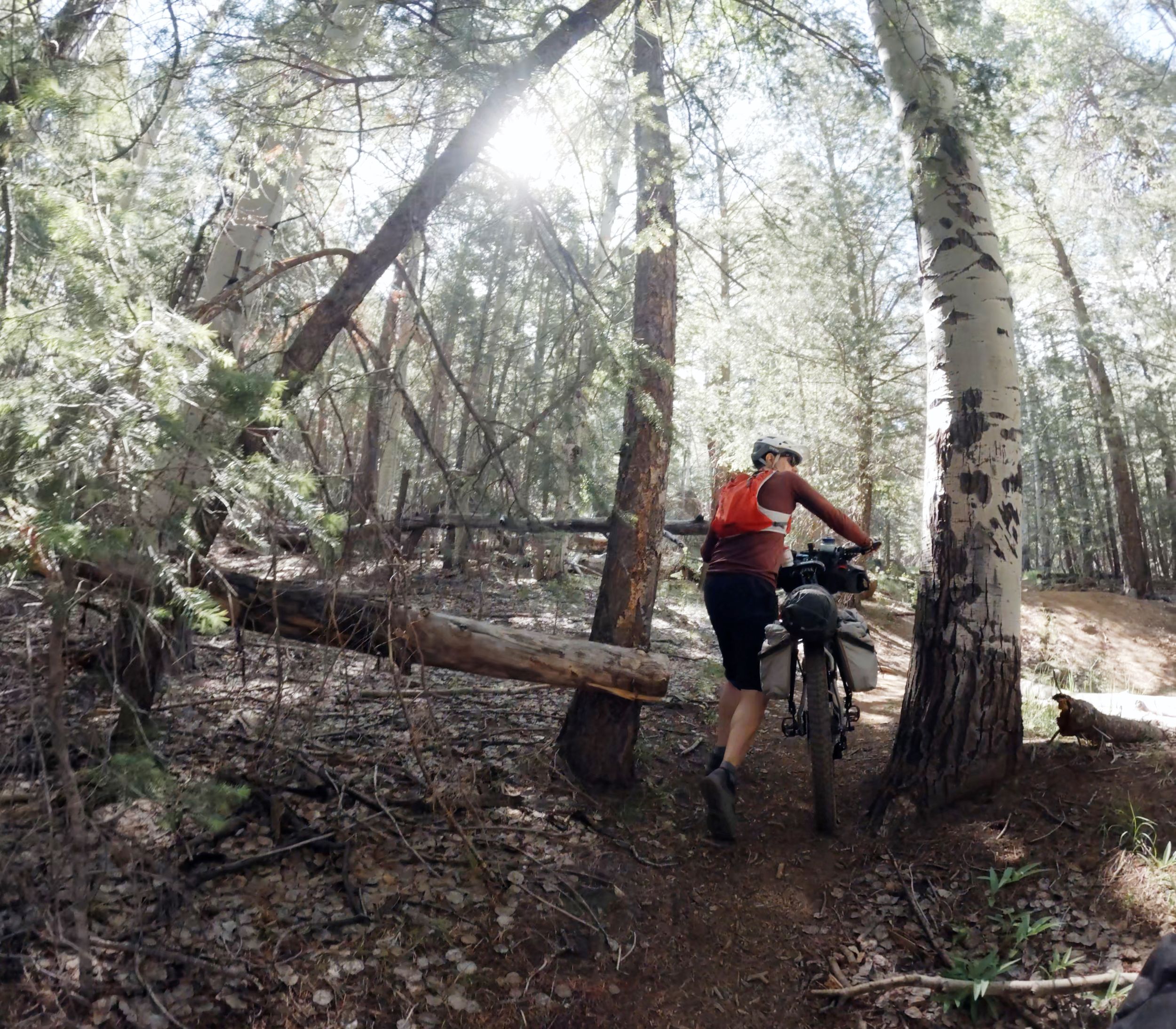
Kris and Sean on one of many hike-a-bike sections.
Why This Documentation Matters
I do a thing I call UnRambling.
It's when I record myself while out biking, hiking, running, driving or swimming. (Well, maybe not swimming). I then transcribe and reflect on what I said as a way to preserve the rich ideas often left out on life's trail.
This post is precisely why I UnRamble.
The photos from this weekend will remind me of what the trip looked like, but the voice recordings capture what it felt like, what we learned, how we grew. The video captures what it sounded like, but it's these words from my pre and post UnRambling—to and from the trip, along with the recorded conversations—that retain what this weekend meant.
The camera captured beautiful mountain scenery and adventure photos. But it missed the breakthrough realization that I need to prioritize long-term health over short-term pleasure. It missed the deepening of friendship through shared challenges. It missed the gear shakedown, nutritional lessons, and the honesty in between.
It marks the moment I realized I need to evaluate the "junk" accumulated in my life and work to unclutter my surroundings.
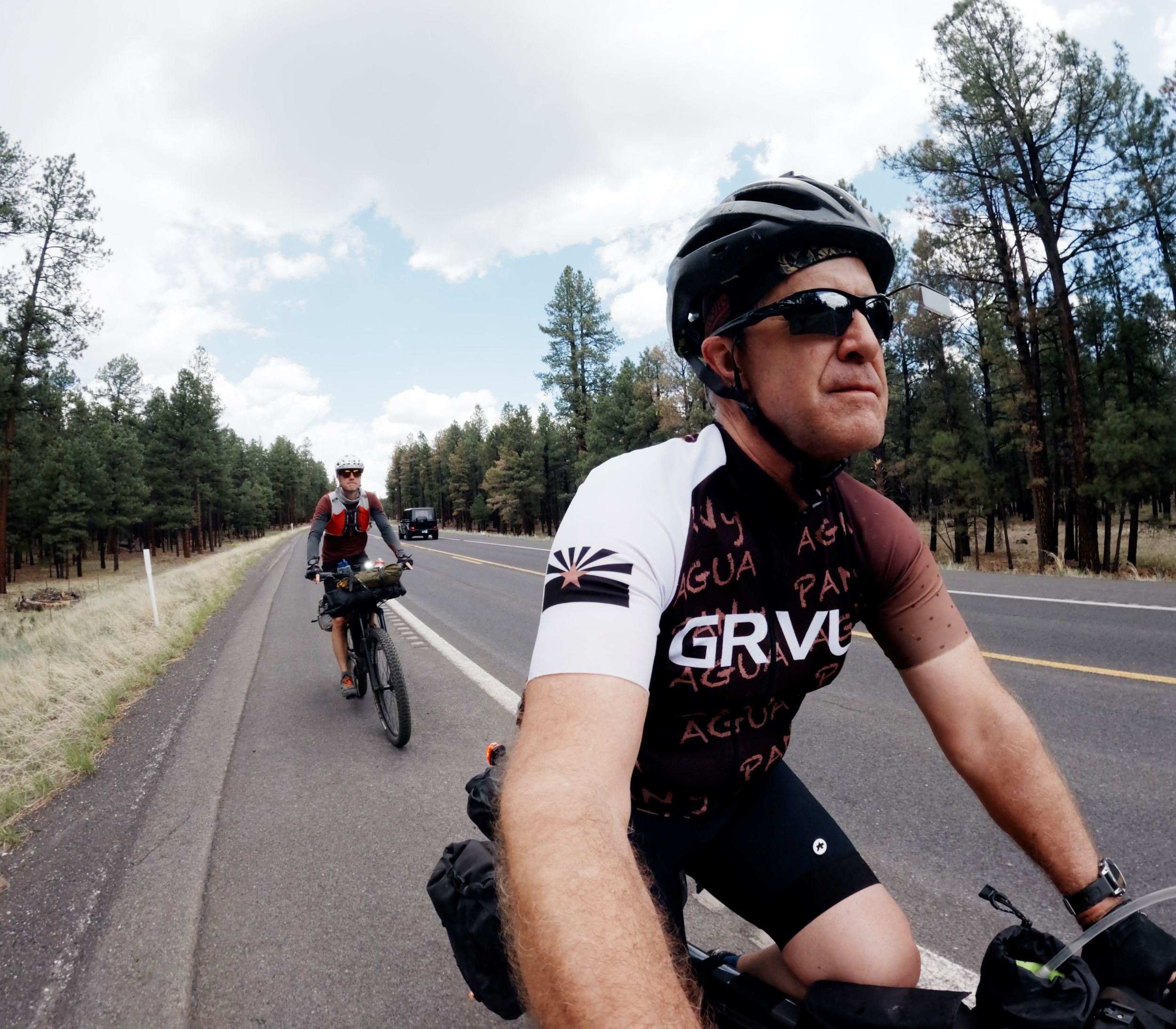
Heading home along Highway 180 into Flagstaff. Pavement and traffic is why we gravel bike in the first place.
The Complete Capture
As photographers, we're trained to think about capturing moments visually. But if we're serious about documenting life—our own or others'—we need to go beyond the frame.
Sometimes the most important moments happen between shots, in the conversations during gear breakdown, in the 3 a.m. encounters with unknown animals, in the honest admissions about fitness and aging and what we really want from life.
The photos from Bismarck Lake will remind me of a beautiful adventure. But the voice recordings will remind me why it mattered—the breakthrough realization that I need to prioritize long-term health over short-term pleasure, the deepening of friendship through shared challenges, the honest self-assessment that comes with pushing yourself beyond what's comfortable, learning how to balance what you need with what you want.
That's what I really want to capture. For myself and for my clients. And sometimes, to get that, you have to put down the camera and pick up a pen (or a microphone).
Trust me, I know that photography is fun and writing is hard, but we owe it to our clients, our families, ourselves—and our future selves—to add words to the pixels we use to capture moments.
The photos from this trip are beautiful and will bring back a lot of memories when I look at them, but nothing compares to the story they represent.
For that, you need words.
And words make all the difference.
What difference do you want to start making when capturing your memories?
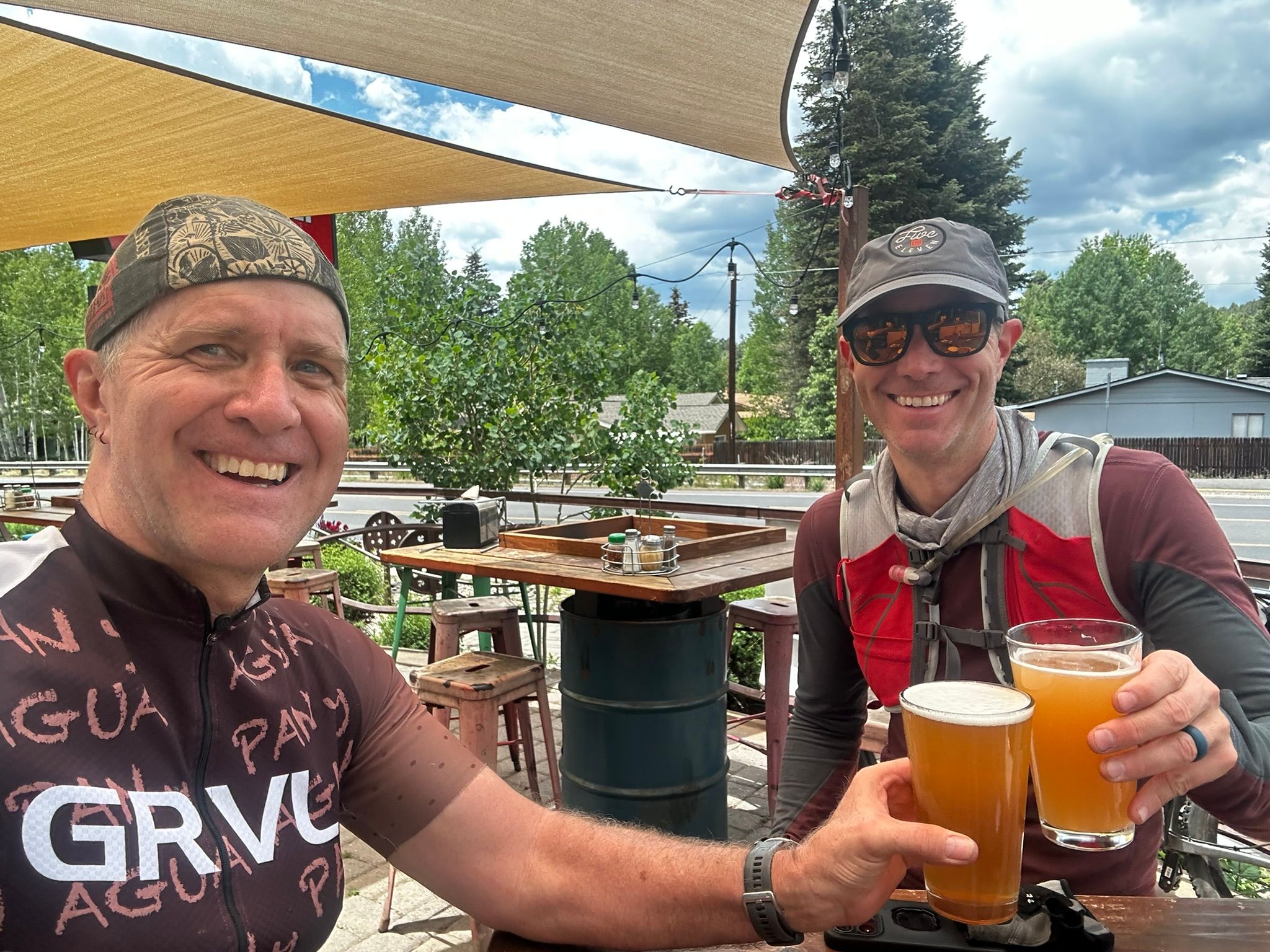
There's nothing like having beer and pizza after a long, multi-day ride.